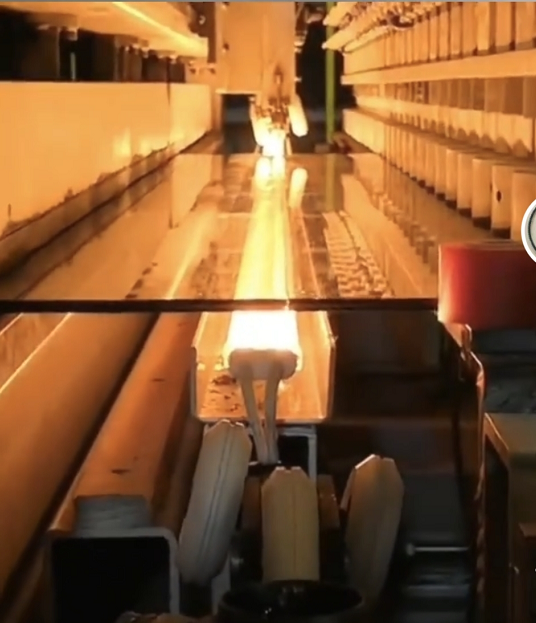
Getting Huge Low-E Glass Sheets Up to Temp Without the Headaches
When you’re working with wide-format Low-E glass—especially the stuff that pushes past 3 meters—you run into a annoying problem: cold spots. If your heat isn’t perfectly even across the whole conveyor, you get coating defects. Plain and simple. Standard, off-the-shelf lamps just can’t handle that kind of scale. That’s why we build these custom, continuous infrared units. We make sure the heat is dead-flat from one end to the other.
The Struggle With 3-Meter Spans
Here’s the thing about running a heating element over 3 meters: voltage drop is a real pain. If you don’t spec it right, the ends of your glass aren’t getting nearly as much juice as the middle. We fix this by obsessing over the wattage-per-centimeter. It’s a bit of math, but it ensures the heat density stays consistent. We usually lean on high-wattage quartz tubes for these big lines. Just a heads-up: check your power supply. You don’t want to be tripping breakers mid-shift. And if you’re cranking the wattage to get those ramp-up times down, make sure your cabinet cooling can keep up. Otherwise, you’re basically baking your own electronics.
What’s Under the Hood
We use heavy-wall quartz glass for the tungsten filaments. Why? Because it doesn’t freak out when you cycle the temperature rapidly. It handles the thermal shock way better than standard glass. For Low-E work, we stick with short-wave or medium-wave IR. This is key because the energy actually gets into the glass instead of just warming up the air around it. We also add reinforced end-caps. Without them, a tube that long would eventually start to bow under its own weight.
Getting It Up and Running
These units are designed to be drop-in replacements. You shouldn’t have to rebuild your whole line to use them. We use industrial connectors that actually stay put, so you don’t have to worry about them vibrating loose while the machines are humming. We usually suggest wiring these in parallel banks. It’s just safer. If one tube decides to quit, the rest of the bank keeps humming along. You’ll notice a slight temperature dip in that one spot, but your whole line doesn’t grind to a halt. One last tip: give your PID controllers a bit of time to calibrate. These larger units have a bit more thermal lag than the small stuff, so they need a moment to find their rhythm.